Our Roulette Computer |
Mark Howe |
Miro Zirdum (Forester) Version: FFZ |
|
| Hardware & General Description | Choice of the following: 1. Virtually any late model cellular phone: 2. Any late model PDA: Not as discrete 3. PIC Microcontrollers: not 4. Image recognition hardware and software: aim a camera and predictions are made automatically. See Hybrid Roulette Computer.
|
Psion 3a PDA:
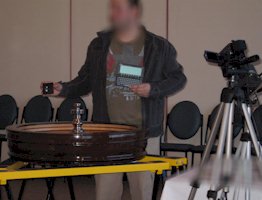
Mobile Phone: We were sent NOTE: Johansen's NOK device is actually Mark Howe attempting to sell his device under fabricated names. Mr. Howe is extremely dishonest and manipulative. He is also the publisher of a review site roulettecomputerreviews.com where he claims to be "Johansen" - he gives top reviews only to his computers, and other computers that don't exist to add credibility to his site. See further information about Mark Howe: Mark Howe's main identity | Johansen (fabricated) This device has been repeatedly publicly tested on a level and unbiased wheel. Each time, the results were no better than random. Shown below is a photo one of the demonstrations of this device.
|
NOTE: This computer uses the same algorithms as the vendor's FFA version. The only significant difference is the FFA version gives audio predictions, whereas the FFZ version gives electric zaps as explained below. As testing was done with slow-motion video, results for the FFZ version would be exactly the same as the FFA version PIC Microcontroller:
The device has also been independently tested by a casino consultant (Mike Barnett) under ideal conditions (with slow motion video). He found the device produced virtually random predictions on modern wheels that are not flawed (95% of wheels). Of course the device developer attempted to refute the test results, although the predictions were virtually random because of inadequate design. Some of it's issues are explained on this page.
|
| Language for Menu and audio predictions | English by default. You can have it in any language you want for an additional US$1,000. | English | N/A (very basic design. no menu or audio predictions) |
| Wheel Timings Data Acquisition:
This is how the computer knows what the wheel and ball timings are |
Manual clicks (standard roulette computer), OR
Image recognition hardware & software (Hybrid Roulette Computer): simply point a video camera at the wheel for predictions. This method is not subject to human error. The technology is patent pending and not available elsewhere. NOTE: hit rates stated below are relevant for the standard computer only. Hit rates are higher for the Hybrid. |
Manual clicks (subject to human error) | Manual clicks (subject to human error) |
Does the computer predict which diamond will be hit, which part of the diamond will be hit, and how the ball will hit the rotor? Most computers incorrectly assume the ball is going to hit the wheel rotor (the part with the pockets) at a point where the ball reaches a certain speed. This is incorrect because the ball may hit a vertical diamond, or a horizontal diamond, or it may not hit any diamond at all. Whatever the case, the ball's behavior is very different for each type ball fall. A computer that does not account for different types of ball falls will produce virtually random predictions on modern wheels. In fact this is designed to be the case for modern wheels - it is the very purpose of vertical and horizontal diamonds. |
With the exception of microcontroller versions, all our computers predict which diamond will be hit, the part of the diamond that will be hit (accurate to within 1/3rd of a diamond), and the manner in which the ball will fall. In other words, if the ball clips a horizontal diamond then lands on the other side of the wheel, the computer predicts this. Or if the ball misses all diamonds completely, the computer will adjust for the different type of ball fall. No other computer even remotely has such capabilities. |
Assumes the ball will fall exactly the same way irrespective of whether the ball hits a vertical or horizontal diamond, or if the ball doesn't hit any diamond at all. This computer does not correctly predict where the ball will fall from the ball track in the first place. It is therefore not even remotely capable of correctly predicting which diamond the ball will hit, and certainly not which part of the diamond will be hit. |
Assumes the ball will fall exactly the same way irrespective of whether the ball hits a vertical or horizontal diamond, or if the ball doesn't hit any diamond at all. This computer does not correctly predict where the ball will fall from the ball track in the first place. It is therefore not even remotely capable of correctly predicting which diamond the ball will hit, and certainly not which part of the diamond will be hit. The hardware used for this device is neither capable of supporting the algorithms, or storing the data required to make such a feature possible. |
Average exact number hit rate on modern LEVEL wheels (about 1% of wheels) The number of wins if you covered just one number |
1 in 17 | Ineffective (virtually random results) | 1 in 28 NOTE: This is under "ideal" conditions where video footage is slowed to obtain the prediction. In real casino conditions, application is almost impossible due to the method of prediction, so not even this accuracy rate is realistically achievable. |
Average exact number hit rate on modern SEMI-TILTED Wheels (about 94% of wheels) The number of wins if you covered just one number |
1 in 14 | Ineffective (virtually random results) | Ineffective (virtually random results) |
Average exact number hit rate on modern TILTED Wheels (about 4% of wheels) The number of wins if you covered just one number |
1 in 12 |
1 in 22 | 1 in 16 NOTE: This is under "ideal" conditions where video footage is slowed to obtain the prediction. In real casino conditions, application is almost impossible due to the method of prediction, so not even this accuracy rate is realistically achievable. |
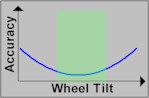
Accuracy Vs Wheel Tilt Charts These charts show the accuracy of each computer with relation to wheel tilt. Only a correctly constructed computer will increase in accuracy as wheel tilt increases. This is very important because most wheels are neither tilted or level - they are in fact somewhere in-between which makes computer design far more complex. The green area shows the degree of tilt for most wheels. The relevance of these charts is very important to understand. |
The green area shows the area for 95% of wheels. Accuracy increases as wheel tilt increases. The computer deals with level wheels, heavily tilted wheels, and semi-tilted wheels. Approximately 95% of wheels are semi-tilted |
The green area indicates 95% of modern wheels, where accuracy is minimal. This is due to a fatal design flaw, where the computer incorrectly assumes the wheel is either: 1. Physically perfect (which it never is), or 2. Heavily flawed (which it very rarely is). In reality, 95% of modern wheels have slight imperfections, but these subtle flaws make an enormous difference to where the ball will actually fall. |
| Algorithms to deal with semi-tilted wheels
Most wheel are not tilted enough to be considered tilted, and not level enough to be considered level. So if a computer doesn't cope with semi-tilted wheels (which are 94%+ of wheels), it is not taking advantage of all possible technology. |
YES | NO | NO |
Wireless Capable Without wireless capabilities, only single user application is possible. This means you need to take timings of the wheel, then quickly place bets all by yourself. This means you can't stand at the betting table where you need to be. Furthermore, you will be looking at the wheel then making sudden late bets, which very easily reveals to casinos that you are a roulette computer user. Professional computer teams MUST use more than one player to ensure covert application. |
YES, and both the wheel clocker and bettor hear all predictions and computer audio prompts. This ensures both players are synchronized. |
YES, although the player taking timings (wheel clocker) does not have access to the computer's audio prompts. This means they don't know the status of the computer, or if the other player is even receiving predictions. They only way they can obtain this information is by collaborating with the other player (that places the bets), which can reveal to casino staff that a team is in operation. In other words, there is no practical support for team-play that can actually be used in the real casino environment, so your only option is to play as a single player. This means you must both look at the wheel to take timings, and bet. This raises far more suspicion than team-play. | NO. Only one player can use this device, which means you must look at the wheel to take timings yourself, then make your bets quickly. This makes it blatantly obvious to casino staff that you are cheating. NOTE: The FFA version of this computer IS wireless capable. However, the wireless transmissions are very easily detected - frequency hopping is not used, and transmissions are not encrypted. Use of such wireless is somewhat like a beacon for casino surveillance equipment, which is why you pay far less. You basically pay to be detected which is beyond a poor product - it is virtually criminal. |
Type of Wireless Having wireless capabilities alone is not enough. The wireless equipment MUST be undetectable, or you are announcing the presence of a cheating device. |
Invisible Network (invisible to casino surveillance equipment), OR Signal Generator (not recommended) | Signal Generator only. Such basic signals are very easily detected and offer no covert properties. | N/A (no wireless) NOTE: The FFA version of this computer IS wireless capable. However, the wireless transmissions are very easily detected - frequency hopping is not used, and transmissions are not encrypted. Use of such wireless is somewhat like a beacon for casino surveillance equipment, which is why you pay far less. You basically pay to be detected which is beyond a poor product - it is virtually criminal. |
| Deceleration Charts Viewable
This enables the user to physically see the deceleration curve the computer is using to confirm accuracy of mathematics. |
YES, the user can see original timings and the polynomial curve used for predictions. | NO, you have no way to validate accuracy of samples until you have tested the device and potentially depleted your bankroll. This vendor claims to use polynomials, although tests we've conducted indicate the claims are likely false. |
NO. This device does not use polynomials. |
| Ability to set up at wheel
For actual application in real casino conditions, this is essential |
YES, it takes 1 spin to set up the ball deceleration model. Play mode then begins, and the computer automatically "learns the wheel" during play. Accuracy improves the more you play. |
YES | YES |
| Ability to determine where ball will actually fall from the ball track, even when the ball gradually changes the distance it travels (air pressure variations)
Without this ability, the computer cannot correctly deal with slight changes in the ball's deceleration that have a major impact on where the ball will fall. |
YES, tuning is done automatically while you play. Accuracy is confirmed by audible beeps at the precise moment when the ball is predicted to fall. The variation of the ball's deceleration rate is automatically learned. |
NO. This device has a feature that attempts to do this, but it is very poor and inaccurate. | NO. It does part of this process correctly (about 15% of it), but fails to do other essential components. Additionally, it at least has a feature that informs you when deceleration rates have changed so you know when to take new samples. But this is only "adequate" for tilted wheels, not modern level and semi-tilted wheels where air pressure variations make it impossible to determine which diamond will be hit. This alone can make accuracy no better than random for this device. |
Ability to make predictions when the ball is at the same speed On wheels with particularly deformed ball tracks, accuracy is greatest when the ball reaches a specific speed. By isolating the ball speed, accuracy can be improved. |
YES. The feature can be toggled ON/OFF. When it is ON, accuracy can be maximized. When it is OFF, predictions can be obtained at any point in the spin to ensure you receive a prediction at the latest point in the spin possible. |
NO | YES, it although this feature cannot be switched off. This is because the device does not use polynomials.
|
| How the player is told where to bet | Wireless earpiece (covert audio): single number, or 3 numbers, OR
Speakerphone (audio): excellent for practicing, OR Vibration mode (covert): Vibrations can be used many different ways defined by the user. The user can select the desired option and switch between them instantly |
Wireless earpiece (covert audio): single number
only
Speakerphone (audio): excellent for practicing |
After taking clicks to establish timings, the device will give you a painful electric zap. When you get the zap, you see what number is under the fast moving ball. This is almost impossible to with any kind of accuracy, but it's not even your predicted number yet. To get your actual prediction, you must then manually and visually rotate the initial number by the required angle, and see what number is at that angle on the wheel. You do this for every spin which is almost impossible to in the comfort of home let alone real casino conditions. This is because the ball is way too fast to see the numbers accurately, and in real casino conditions you cannot possible see the wheel from a top view.
Click HERE to download video demo of this device to understand why it is impractical |
| Beeps heard when clicks are made
Actually hearing beeps as you click the button (to take timings) greatly increases accuracy of clicks. |
YES, plus the duration and volume of the beep is variable. | YES. Fixed duration and volume of beep. | NO (no audio), you don't know whether or not a click was actually registered. |
| Variable Vibration Intensity and Duration | YES, you can make vibrational pulses have any duration or intensity you like | N/A (no vibration) | N/A (no vibration) NOTE: This vendor offers a version that does offer vibrations (FFV) |
| Prediction Process
What is required to make one prediction |
First two wheel clicks (either full, half revolution, or two revolutions), then either 2,3,4,5 or 6 ball clicks, OR First 2 clicks for the wheel, then continual clicking for the ball until a prediction is given. Very flexible - you can set to use more clicks for better accuracy. |
First three ball clicks, then two wheel clicks. This is a fatal and incorrect order which degrades accuracy. | First 2 clicks for the wheel, then continual clicking for the ball until a prediction is given. |
| Ability to operate even when you can only see part of the wheel
Rarely do you have a perfectly clear view of the wheel. Computer use must be practical in such situations. |
YES, you only need to see the ball and zero pass. | YES, you only need to see the ball and zero pass. | NO, you need a top view of the wheel for this device to be possibly viable. This is because you aren't actually told where to bet - you only get an electric zap. At the time of the zap, you observe the number under the ball. This alone is nearly impossible, but then you need to mentally add/subtract angles to determine the final predicted number. This is simply not a viable or realistic process. |
| Mathematics
This is the heart of any computer. If the mathematics is incorrect, the computer cannot succeed. |
Complex polynomials to the order of 3,4,5 or 6 (user can select). It is the only mathematics that can accurately model what occurs on the wheel. | Sinusoidal mathematics. It is impossible to accurately model real ball deceleration with such mathematics.
It is no different to using linear (straight-line graphs). This mathematics can only work for heavily tilted wheels - NOT for level wheels. This is because the maths determines only ball drop time, but it does not tell you accurately WHERE the ball will drop. |
This is a basic countdown timer using linear modeling. Instead of modeling the ball deceleration with a "curved" graph, it uses a straight graph to find the time when the ball will fall, and the "known" distance. This is old mathematics, and is only used for simplistic devices. There are many problems with such algorithms.
The developer has done well with limited resources, but limited resources means cutting corners. As a result, the device can only be applied successfully on older wheels, and even then it doesn't achieve the highest accuracy possible. |
| Ability to deal with human errors in timings | Excellent. If you attempted to predict the same spin repeatedly on DVD with versions 11.3 and above, predictions are all within a 6 to 3 pocket arc. See the videos page for this particular demonstration. | Very poor | Excellent |
| Number of players that can receive predictions with wireless versions
The purpose of using wireless technology (legally) is so not one specific player is looking at the wheel while winning big (to avoid suspicion). If only ONE operator can receive predictions, there is little point to using wireless technology. Multiple player ability is "must have" for serious players. |
2 | 1 | N/A (no wireless) |
| Transmitters installed into any common object such as pens | YES | YES | N/A (no wireless) |
| Number of signal bursts required for wireless
The less sophisticated the wireless technology, the more signal bursts are required, and the easier the signals are to detect |
1 The only wireless signal ever sent is an extremely short burst of data that tells the 2nd player where to bet. There are no emissions at all during the timing process. |
5 This is 5 times easier to detect than a single burst. There is one radio emission for every click of the button when you take timings. |
N/A (no wireless) |
| Wireless Encrypted | YES, plus frequency hopping is used to ensure emissions are virtually undetectable. | NO. Detecting the signals only requires a basic receiver. | N/A (no wireless) NOTE: This seller has other models that are capable of wireless, but the wireless transmissions are extremely easy for casinos to detect and intercept. There is no frequency hopping or encryption. |
| Video demo of level wheels provided (with lava lamp & continuous footage) | YES. Important points for consideration:
i. First 50 Spins: 1 in 16 exact number hit rate ii. Second 50 Spins: 1 in 16 exact number hit rate
i. Automatic adjustment of predictions based on wheel rotor speed for each spin. ii. Risk announcement so the player knows when a particular prediction is likely to be less accurate than others. iii. Only 5 clicks are used to establish the ball timings. Up to 6 ball clicks can be used to increase accuracy.
If all features are enabled, accuracy is greatly increased. However, to prevent trade secrets from leaking to casinos, most features in this video demo were disabled. |
NO. The only video provided has the following credibility issues:
|
NO, the only video demo provided is very basic, and demonstrates more method of application. |
| Vibration mode capable
This is the only truly undetectable method for relaying bets. |
YES (variable speed and intensity), and various methods of roulette computer vibration application | NO | In other versions YES (FFV), but the method of vibration merely replaces the electric zap. Vibrations used this way degrade the device further. |
| Variable Sound Volume | YES. Adjust to your comfort levels. | NO, the audio is too loud. | N/A (No sound) |
| Wireless Earpiece & Induction loop | YES | YES | NO |
| Variable induction loop transmission strength
Induction loop signals are easily detected, so wireless earpiece use is not recommended unless you have the right equipment. |
YES, the user can adjust the transmission strength of the induction loop, dramatically reducing the chances of induction loop signals being detected. | NO, the induction loop is easily detected | N/A |
| Completely invisible wireless earpiece | YES | YES | N/A |
| Audio Predictions Given
If you can actually hear where to bet |
YES | YES | NO NOTE: The vendor's FFA version produces audio predictions, although the algorithms that ultimately determine accuracy are no different to this version (FFZ). |
| Electronically Shielded:
If a device is not shielded, the mere operation of it with simple button clicking can be detected. The higher the voltage, the easier a device is to detect. Like when you flick a light switch, you may notice the TV flicker. This is called "radiant electricity" which as an energy researcher, I'm very familiar with. For more information, research "Tesla's Radiant Electricity". |
YES | NO | NO, plus the actual mechanism that tells you where to bet is a high voltage electric zap - the worst option possible. This is extremely easy for casino surveillance equipment to detect. |
| Ability to manually enter SAMPLE TIMINGS from recorded footage (60FPS)
This enables the computer to achieve maximum accuracy in far less time. |
YES, although it is not needed. It is only used if a roulette wheel spins very infrequently (perhaps once every 4+ minutes) so the user can setup fully after just one spin. Our computer does NOT need this capability because the wheel is learnt automatically, but it is better to be with than without this feature. |
NO. Even IF the wheel was learnt correctly (which it isn't), in casinos where the wheel spins very infrequently, the player would need to waste an hour waiting for the computer to learn the wheel and achieve maximum accuracy. | NO. Even IF the wheel was learnt correctly (which it isn't), in casinos where the wheel spins very infrequently, the player would need to waste an hour waiting for the computer to learn the wheel and achieve maximum accuracy. |
| Ability to manually enter timings in PLAY MODE to test accuracy of algorithms:
This allows you to see the output of the mathematical equations and verify the authenticity and accuracy of the computer's algorithms. Without this feature, you cannot determine the true accuracy of a roulette computer without the factor of the operator's competence. |
YES, you can see EXACT output including predicted rotations. This helps you confirm you are getting what you paid for. You can also use the 4 diamond test (as shown in video 2 on the videos page), although this particular feature is more for the player to verify the accuracy of the mathematics. |
NO | NO |
| Tuning (very important):
Without tuning, predictions are called "raw predictions". Tuning is essential for accuracy. |
Visual, Manual, Advanced Automatic Tuning, and Dynamic Algorithms.
Visual: This is where you look at the wheel each spin and "visually" determine the number of pockets from the "raw" prediction to the "tuned" prediction. This is only recommended for experienced players. Manual: You see the scatter chart and rotate predictions to tune manually. The tuned predictions are rotated a set number of pockets. If the wheel is outside a speed range you set, the computer notifies you. Advance Automatic Tuning: using chi-squared and standard deviation statistical analysis, the computer will automatically tune the computer for you as you play. If the wheel is outside a speed range you set, the computer notifies you. Dynamic Tuning: The greater the wheel speed, the further the ball will come to rest from the point of "raw prediction". The "dynamic" feature will automatically tune for each spin based on the speed of the wheel when the ball is predicted to fall. For example, if the wheel timing is 4000MS, then the ball may come to rest +5 pockets from the "raw prediction". If the wheel speed is 3000MS (faster), the ball may come to rest at +15 pockets from the raw prediction. This is a 10 pocket difference. Without this feature, ordinary computers would give predictions as if the wheel speed were the same every time, which it's not. Without this feature, even if a computer perfectly predicted where the ball will actually strike the wheel rotor, the difference in wheel speed between spins may make other computers almost completely ineffective. |
Visual: This is where you look at the wheel each spin and "mentally" determine the number of pockets from the "raw" prediction to the "tuned" prediction. This is not recommended as it's extremely difficult.
Manual: you have to check the scatter graph then manually tune based on your own analysis. If the wheel speed varies during play, you receive the prediction anyway whether it will be accurate or not. If the wheel speed varies, you receive the prediction regardless. You cannot restrict acceptable wheel speeds, and it does not have anything close to "dynamic" tuning (adjusting predictions based on wheel speed). This contributes to enormous inaccuracies when wheel speeds vary between spins, which they inevitably do. |
Visual only: you have to observe the wheel every spin and manually adjust where to bet a specific angle such as 70 degrees. This is impossible in the real casino environment.
If the wheel speed varies, you receive the prediction regardless. You cannot restrict acceptable wheel speeds, and it does not have anything close to "dynamic" tuning (adjusting predictions based on wheel speed). This contributes to enormous inaccuracies when wheel speeds vary between spins, which they inevitably do. |
Risk Assessment Lets you know when a prediction is likely to be inaccurate due to various factors |
YES, you can set any acceptable wheel speed range. When the wheel is outside the range you select, the computer announces "risk". You can set whatever wheel speed range you like to accept 100%, 50%, 25% or even 10% of predictions (most players set to 100% so ALL wheel speeds are accepted and "risk" is never announced). The computer can also be set to announce "risk" when your clicks are obviously very inaccurate. | NO | PARTIALLY. When timings don't meet certain specifications, no prediction is given - the player is not notified though. This occurs often on over 70% of spins which is extremely frustrating, especially when the device does not reliably reset to play mode. After no prediction is given, often the device appears to crash and needs to be reset. This is what many others, including an independent casino consultant has found (Mike Barnett). The unreliability of the device alone makes it extremely impractical. |
| Adjusted predictions based on wheel rotor speed
Most computers tune the computer based on the assumption the wheel is the same speed on every spin, which is not the case. |
YES, you can set tuning settings so the computer adjust the prediction for specific wheel rotor speeds. This ensures accuracy is optimized over any wheel rotor speed. | NO, the computer has one central scatter chart and makes no adjustments based on wheel rotor speed. | NO, the computer makes no adjustments based on wheel rotor speed. It has no scatter analysis at all. |
In-Built Scatter Analysis Where the ball falls and actually strikes the rotor (part with pockets) is NOT necessarily going to be where the ball actually comes to rest. So the computer needs to make adjustments and determine where it will bounce to. |
YES, scatter chart and in-built automated statistical analysis of the scatter chart. You do not need to leave the roulette wheel to manually analyze the chart and specify the tuning settings - it is all done automatically. | Psion 3a version: Scatter chart only. You must manually check the scatter graph away from the roulette wheel, then manually tune. The tuning is not automatic. Mobile phone version: no scatter chart at all. You must manually draw a scatter chart on paper. This is highly suspicious at the roulette wheel. |
NO, there is no scatter graph of any kind. All elements of dealing with ball scatter must be mental "estimations". Even if you make calculations on paper, this is highly suspicious at the roulette wheel, and there is no guarantee your calculations will be accurate. This is because the method of prediction (zap) is extremely impractical, and almost impossible to implement. |
| Ability to make accurate predictions with 8-10 before the ball falls on level wheels | YES, such early predictions are possible for all wheels providing the ball track is not too deformed (creating far too erratic ball behavior). | NO, unless the wheel is very heavily tilted. The device is overall simply too inaccurate. | NO. But provided the ball track is not too deformed, in theory this device can do it, but not in real casino conditions because you have to see the number under the ball at the time of the electric zap. And for numbers to be seen at this time, the ball is moving far too quickly. Bare in mind this is all assuming you can actually see the ball when the zap occurs because in real casino conditions, you cannot see the entire wheel. |
| Ability to make predictions BEFORE the wheel spins | YES, repeating pattern analysis software is included. It uses techniques that are globally recognized to effectively beat roulette. So even if no bets are permitted after the wheel spins, you will still have a valuable tool. | NO | NO |
| Can take timings of partial revolutions
Without this feature, predictions are given significantly later on slow wheels. |
YES | YES | YES |
Authenticity Certificates Ensures software is original and professionally written/coded |
Digitally Signed to confirm origin. This signing cannot be simply changed, so you can be certain we are the originators of the software. | NO | NO |
Security Codes Required Protects against unauthorized use |
YES | NO | NO |
| Prediction Presentation | Single number, multiple numbers, sectors | Single Number only | Electric zap when the ball passes the "raw" predicted number (single number), then you mentally/visually tune to get your prediction on each spin (near impossible) |
Rapid software shutdown Allows the program to be locked and invisible at the press of a button |
YES. Plus with the wireless versions, the winner will only ever have a mobile phone on them - no induction loop, and no cables of any kind. You could be physically strip-searched, and there will be no obvious roulette computer. | NO | NO. At first sight, the device is quite obviously to cheat at roulette. If you are ever searched, there will be no doubt you have been using a roulette computer. |
| Guaranteed effective on all wheel designs | YES, it includes a legally binding 200% money-back guarantee to support this. | NO, there is no guarantee at all. | NO, there is no guarantee at all. The seller's terms of purchase are only that if you don't like the product, your only recourse is to stop using it. There are no refunds. |
| Ability to test accuracy of samples before play
This helps you confirm the sample data you obtained is accurate. |
YES (audible beeps heard and/or vibration felt when ball is predicted to fall). This allows you to instantly test samples for accuracy rather than play 30+ spins only to find out your samples are inaccurate. | NO, if your samples are inaccurate, you wont know until you play 30+ spins | NO, if your samples are inaccurate, you wont know until you play 30+ spins. NOTE: Current versions give you an electric zap when the ball is predicted to fall. |
| Number of clicks for ball timings
The more clicks, the greater the accuracy, but the more time it takes to obtain a prediction |
2,3,4,5 or 6 (user choice), OR 4 - 15 or so. There is no defined number of clicks as you keep clicking until the ball reaches the desired speed. NOTE: You can set which option you prefer in the user settings. |
3 | 4 - 15 or so. There is no defined number of clicks as you keep clicking until the ball reaches the desired speed. |
| Automatic Reset for Accidental Clicks
If you accidentally click the button (i.e. a toe switch while walking), the computer must be able to automatically reset, especially if you don't use an earpiece. |
YES, adjustable reset time | NO | NO |
| Payment Method | Wire Transfer, Bank Draft, Western Union, or Cash | Western Union or Cash | Paypal or Bank Transfer |
| Seller's real name / verifiable company name given | YES, a PTY LTD Corporation. We have been in operation since 1999. As a corporation, we are subject to stricter business practices, so you can be more assured we accurately describe our products. | NO (fabricated personal name and company name. The company name "Mark Howe Technologies" does not exist in any jurisdiction) | NO, but you find out after buying. (the business name is MZ Electronics, but it is not a corporation, and therefore not subject to strict trading laws of corporations) |
| Size of software without sound files
A small file size is indicative of a simplistic program |
400KB - 600KB depending on version | 6KB - 14KB depending on version. The software is extremely simplistic and can only produce an edge on heavily "tilted" wheels which are so easy to beat that electronics are not even required. | Maximum of 1KB code and 68 bytes memory (not KB, just Bytes). This is extremely small with very simplistic algorithms that are incapable of beating modern roulette wheels. To give you an idea of how small 1KB is, the below image is just over 1.2KB:
|
| Personal Demonstrations | YES, also group demonstrations are provided. | YES, although some of our current players have witnessed failed demonstrations of this device. |
NO |
| Independently tested | NO, although we spoke to a tester (who's a consultant that helps casinos catch roulette cheats). He tested the IQE6/FF device also compared here. He confirmed his offer to test devices was to "help him do his job better", and whether or not he could purchase my technology secretly, letting him know the full capabilities of my technology is understandably the last thing I'd want to do. However, I have invited him to my public demo at which basic features and accuracy will be demonstrated, which is far less sensitive than merely handing over my technology to casinos. | NO | Yes, and the tester (Michael Barnett) came to the same conclusions we did. Regarding Barnett's tests on a physically flawed (tilted) wheel, he stated: "At the precise moment of this “zap”, the operator must observe the number that is directly under the ball. Given that the ball is traveling in one direction at the rate of around 2.5 meters per second and the rotor is traveling in the other direction at about half that speed, this is no mean feat, particularly in view of the fact that you don’t know when or where this zap will happen. If you are to have any hope in identifying the number under the ball at zap time you’d better hone your peripheral vision skills." He also stated: "FF does a good job of giving you a consistent reference point on wheels that exhibit stator bias (drop_zone) but there are several others that do this relatively trivial task (for a computer) equally well and don’t require you to have the visual acuity of a Nighthawk." In other words, it's basic algorithms can beat raw heavily flawed wheels, but for the trivial task of beating such flawed wheels, the design is very poor. Regarding his tests on a roulette wheel that is not physically flawed (level), he stated the following: When the device did produce predictions the results were close to random. The testers were unable to obtain a statistically significant advantage on any of the test sessions. We agree with his findings, although he neglected to state prediction with this device is only "possible" if you can see the ball when the zap occurs. This is likely because his testing was done with slow motion video to ensure the correct predicted number was obtained. |
| Public Demonstrations | YES, see details at genuinewinner.com/conference.htm | YES, to the Guardian Newspaper although it was on a "tilted" wheel which is very easy to beat. Although the vendor claimed otherwise (he claims the roulette wheel was level), the newspaper article made it quite clear the wheel was biased and tilted, and that the vendor lied about this point. Such wheels are very easy to beat. Furthermore, this demo was over an insignificant 60 spins - even the newspaper reporter said the test was insignificant. | NO, although the device was tested independently as per above. |
| User Interface | Extremely user-friendly and simple interface | Poor interface, but acceptable when the user is aware of how to use. | No interface, and very difficult to learn to use. |
More reasons why cheaper devices tend to lose you money instead of making it:It may be tempting to purchase a cheaper device, but the very reason they are cheaper in the first place is because they tend to lose money, or can only be applied successfully on very few wheels. Below are some of the reasons for this, and the problems with roulette prediction that need to be overcome.
Problem 1: HOW the ball will fall Especially on modern wheels, the ball does not hit a vertical diamond, then be deflected predictably down on nearly every spin. This may have been the case with wheels 10 years ago, but it isn't anymore. On modern wheels, even if a computer correctly predicts where the ball will lose momentum and fall, predictions will not be accurate. Why not? Because the ball may hit a horizontal diamond and be deflected to the other side of the wheel. The ball may clip a horizontal diamond, then hit a vertical diamond. The ball may hit a vertical diamond solidly. It may even completely miss all diamonds. Whatever the case may be, the different types of ball falls often have completely different outcomes. Putting this into perspective, for a computer to beat modern wheels, it must know not only where the ball will fall, but also HOW it will fall. Our computer is the only computer available anywhere that determines not only which diamond will be hit, but which part of the diamond will be hit, and the resulting manner in which the ball falls.
Problem 2: WHERE the ball will fall For now, forget about HOW the ball will fall and consider the following: to know WHERE the ball will actually fall from the ball track, the computer MUST account for the fact that wheels are NEVER perfect. In fact ball tracks have many imperfections that appear subtle, but they actually have an enormous influence on where the ball will actually fall from the ball track. Every roulette computer except ours assumes the ball will either:
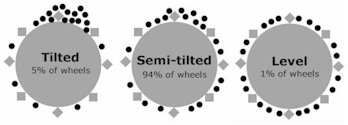
Does the ball actually fall simply when it reaches a certain speed? NO. There are numerous factors that determine where the ball is going to fall, and when. See below the three types of wheels you will encounter:
Problem 3: Air pressure and ball deceleration rate variations In any environment, air pressure gradually varies over time. When air pressure varies, the deceleration rate of the ball, AND the speed at which the fall falls from the ball track also varies. This means the overall distance the ball will roll will also vary. A player can no more change air pressure than they can change the weather. Significant air pressure variations often occur within approximately 30 minutes, but the change occurs gradually. Consider the following example: if the ball was released at a particular speed, the ball may complete 18 revolutions before falling. Now if the ball is released at the exact same speed just one hour later, even a very slight air pressure variation may mean the ball will complete 21.3 revolutions before falling - that's a difference of 3.3 whole revolutions, and about 4 extra seconds before the ball falls. Here's how this will affect affect accuracy if the computer does NOT account for the air pressure variations:
For a computer to make adjustments for air pressure variation, it MUST use polynomials. Polynomials are mathematical equations used to generate a "best fit" curve to model the deceleration of the ball.
LEFT: The blue dots represent the actual ball timings. the red line is the "best fit" polynomial curve. The polynomial curve can be seen on our computers in the settings. You can see that despite the obvious timing errors (blue dots) the polynomial curve is smooth and accurate.
As air pressure naturally varies in the casino environment, the ball's deceleration rate will naturally change too. Even a very slight change in ball deceleration rate may make the ball travel several additional revolutions. See the chart below for explanation:
The yellow area shows the additional difference traveled. Within only 30 spins in the casino (about an hour), this difference in distance is often over 3 revolutions. In the case of roulette computers, we only consider the last 7 or so seconds before the ball falls, not the whole spin, but the effects are still more than significant. Even solely the difference in speed at which the ball falls can make the ball travel an extra revolution. Especially on modern wheels where there is very little margin for error when predicting which diamond will be hit, and which part of the diamond will be hit, even an error of 1cm may result in a computer producing near random results. Modern roulette wheels are designed to ensure this.
IMPORTANT: Some roulette computer vendors may argue that air pressure variations are not significant. This is because they don't own their own wheels, and they develop their devices on DVDs of roulette spins where a spin occurs every 20 seconds. In such cases, air pressure will not vary much for even 50 spins - after all, it is only about 20 minutes of footage. But in real casino conditions, 50 spins is closer to 2 hours of play, and in that time, air pressure variations can dramatically affect where the ball lands.
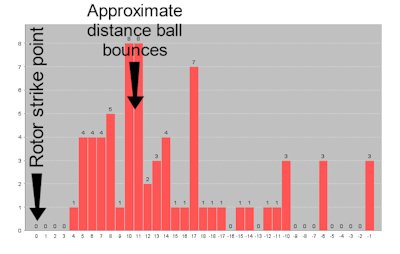
Problem 4: Varying ball bounce and scatter with different wheel speeds When the wheel spins at different speeds, the ball of course behaves differently. This should be obvious to anyone. In fact, even an imperceivable difference in wheel speed may mean the ball bounces to the opposite side of the predicted area on the wheel. For now let's forget all of the other problems with roulette prediction, and assume a computer perfectly predicts where the ball falls, and how it falls. So let's assume the computer knows exactly which pocket the ball will first hit when it falls. Of course the ball will bounce off the initial pocket before coming to rest elsewhere, but for now we're just talking about where the ball first hits on the rotor (called the "rotor strike point"). With the exception of our computer, every computer assumes the ball will bounce the same distance from the rotor strike point irrespective of the wheel rotor speed. So let's say we charted the distance between the rotor strike point to where the ball actually landed, we would expect the chart to look like below:
LEFT: This is called a ball scatter chart. On the horizontal axis, the value of "0" is where the ball actually hits the wheel rotor (the part with the pockets). You can see the ball bounces and comes to rest approximately 10 pockets from the rotor strike point. Most roulette computers conduct analysis based on the assumption that the wheel rotor speed is exactly the same every time. This incorrect assumption alone often makes some roulette computers completely ineffective.
So while a typical scatter chart initially sounds good in theory, the reality is when the wheel is at different speeds, the ball may behave completely differently. Especially on modern wheels, even the slightest difference in wheel speed can mean the ball bounces an extra 12 or more pockets - modern are designed this way. In such cases, if the computer assumes the wheel is spinning at the same speed every time, accuracy may be no better than random. Unlike competing computers, our computers adjust predictions based on the wheel speed of individual spins, and they do this AUTOMATICALLY.
You get what you pay for: Our roulette computers are the only devices that correctly address ALL of the above problems. The competing computers fail to address even one of them, even though just ONE of the problems may make an ordinary roulette computer completely ineffective on modern wheels. So it should be no surprise that they produce virtually random results on modern wheels. Indeed you get what you pay for. Other device sellers choose to ignore the above issues, either because they lack the required expertise, or because they choose to hide the inadequacies of their devices. We do not develop our technology as a hobby, or with the primary purpose of selling it - we develop our technology primarily to use it ourselves, and it is a multi-million dollar business for us. We have invested considerable resources to ensure our technology is literally as good as it can be. Our computers are not cheap, but considering they can return the investment within hours when other computers tend to lose you money, the choice should be clear. With the exception of our microcontroller version, all of our computers predict:
Beware of microprocessor (microchip) computers: Virtually anyone with a basic knowledge of programming and electronics can assemble a microprocessor roulette computer, create a website for it, then call it is the best computer money can buy. Microprocessors are like programmable stopwatches. They have very basic functionality. Years ago when roulette wheels were much easier to beat, microprocessors were a popular choice for roulette computers. This is because the microchip itself costs about $5, and you can write a program for them in a matter of hours. In fact some of the roulette computers we've developed ourselves use programmable microprocessors. We sell one of these versions of ours for US$1,850. It includes the wireless transmitter and receiver for 2 players. However, it does not come with the 200% money-back guarantee that it will beat modern designs. This is because programmable microprocessors are extremely limited hardware. They are fine for beating older and heavily tilted wheels, but NOT modern wheels - even on the easily beaten wheels, they do NOT do the job fully. Microprocessor roulette computers are incapable of beating modern wheels primarily because:
For these reasons, long ago we abandoned development of our roulette computers on microchips. We can still provide microchip computers upon request, although they are not subject to the performance guarantee. |


Hardware is suitable for required functionality, although PDAs are far too large.
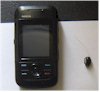
his phone version for free by an unhappy purchaser who believes the computer is a scam (photo shown left). I can only describe this device as the clumsiest roulette computer I've ever seen - it is actually worse than his previous computer and I can confidently say it indeed is a scam. The original purchaser who sent it to us for free believed the same, but Howe refused to give a refund. There is no chance it earned Howe almost US$8M as he claimed - Howe is well known for his outrageous false claims, both about his competitors and his own products.
very basic functionality. In some respects, it is similar to our PIC models. This hardware cannot support a design that is sufficiently sophisticated to beat modern roulette wheels.
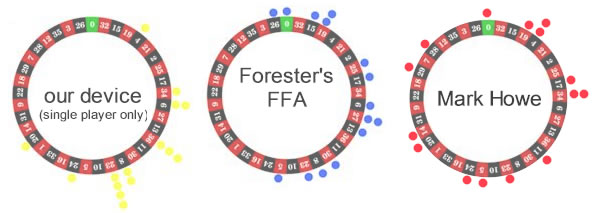
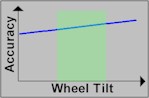
LEFT: The black dots represent where the ball loses momentum and falls from the ball track for each type of wheel (this is just where the ball loses momentum and falls, NOT where it actually strikes the rotor). Tilted wheels are very difficult to find, and level wheels are even rarer. Almost every wheel is semi-tilted, and on such wheels, every computer except ours has a dramatically reduced edge. Specifically that is because 94% of wheels are too tilted to be considered level, but too level to be considered level. In most cases, the resulting accuracy for simplistic computers is no better than random.
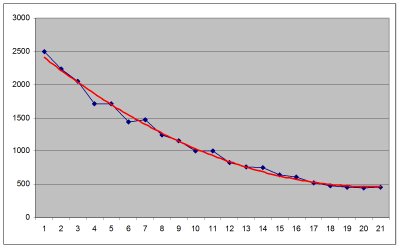
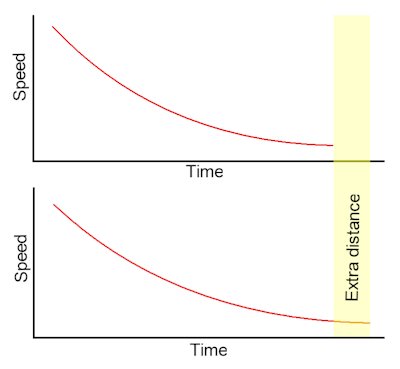
LEFT: In both of these charts, the ball is released at exactly the same speed. The difference in air pressure and therefore the ball deceleration rate is only marginal between each chart. However, even very small deceleration rates make a large difference to the overall distance traveled by the ball.